skiff
The skiff is Santiago's sole vessel for his trade, a small, hand-rowed boat that he uses to fish alone in the Gulf Stream. It is the central physical object of the story, serving as his workspace, his home at sea, and the vessel that carries him into his epic struggle with the great marlin and the subsequent shark attacks. The skiff's small size and fragility are constantly contrasted with the immense power of the fish and the vastness of the ocean, making it a symbol of Santiago's vulnerability and his unyielding determination.
Identity and Description
The skiff is a small, open boat, rowed with oars fitted onto thole pins. It is hauled up on the beach when not in use, and Santiago and the boy, Manolin, carry its gear—the mast, the coiled lines, the gaff, and the harpoon—up to the shack each night. The mast is nearly as long as the single room of the shack, and the skiff itself is small enough that the great marlin, when finally lashed alongside, is described as being like lashing a much bigger skiff alongside. The boat is equipped with a tiller for steering when the sail is raised, and a bitt in the bow to which lines and the harpoon rope are made fast. It has a stern where the old man keeps the bait box and a club for subduing fish, and a bow where he often rests during the long ordeal. The skiff is not motorized; Santiago relies entirely on his own strength at the oars and the power of the wind in its patched sail.
The Skiff as a Stage for the Ordeal
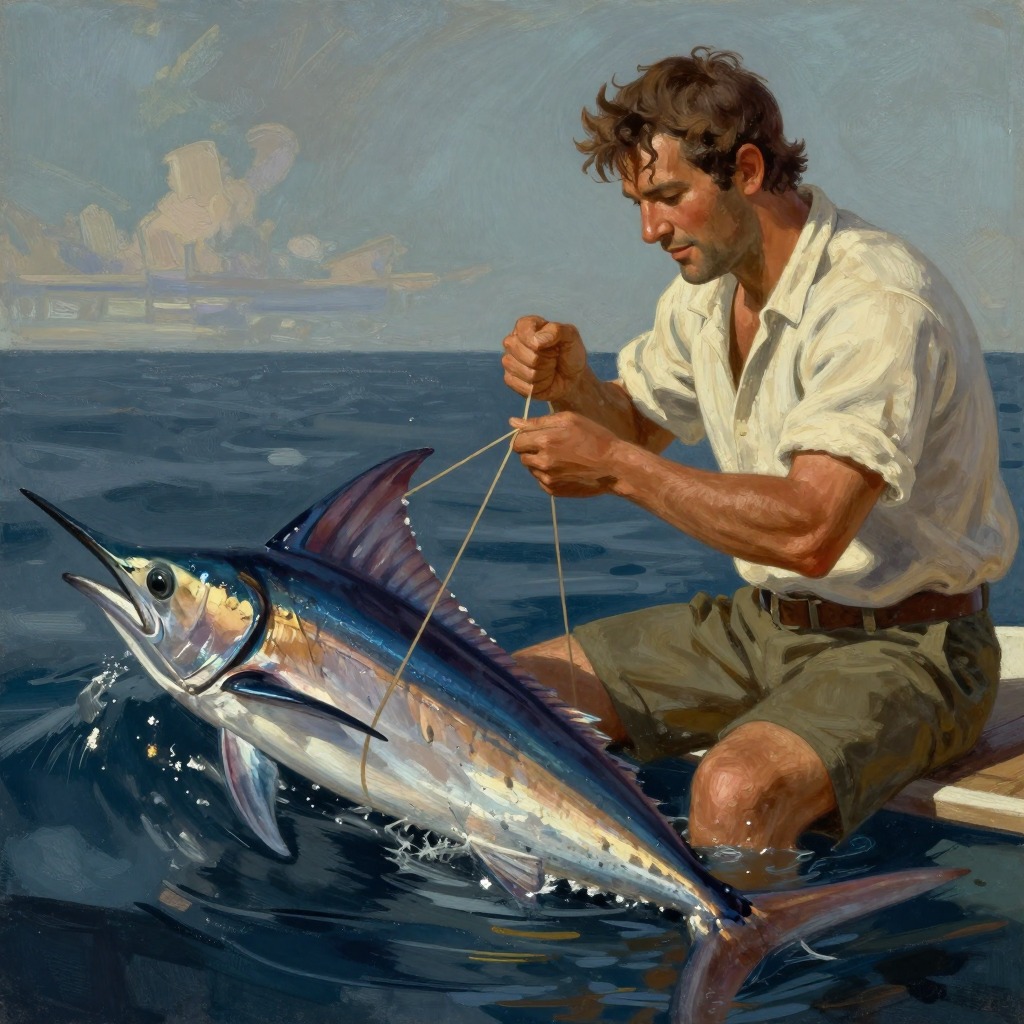
The skiff is the stage for the entire three-day drama. It is from the skiff that Santiago rows out before dawn, sets his baits with precision, and hooks the great marlin. The boat becomes a towing bitt as the fish pulls it steadily toward the northwest, and Santiago braces himself against its thwart and bow, holding the line across his back. The skiff's movement is the primary indicator of the fish's actions: the old man feels the fish's weight through the line and the boat's progress through the water. When the marlin jumps, the skiff is rocked by the splash. When the sharks attack, the skiff shakes with the destruction. The boat is also the site of Santiago's most intimate moments of suffering and endurance: he sleeps against its wood, he washes his hands in the sea over its side, and he eats his meager meals of raw fish on its planking. The skiff's lightness is both a danger—it could be swamped by the great fish—and a safety, as it prolongs the struggle and allows Santiago to use his skill.
The Skiff and the Fish
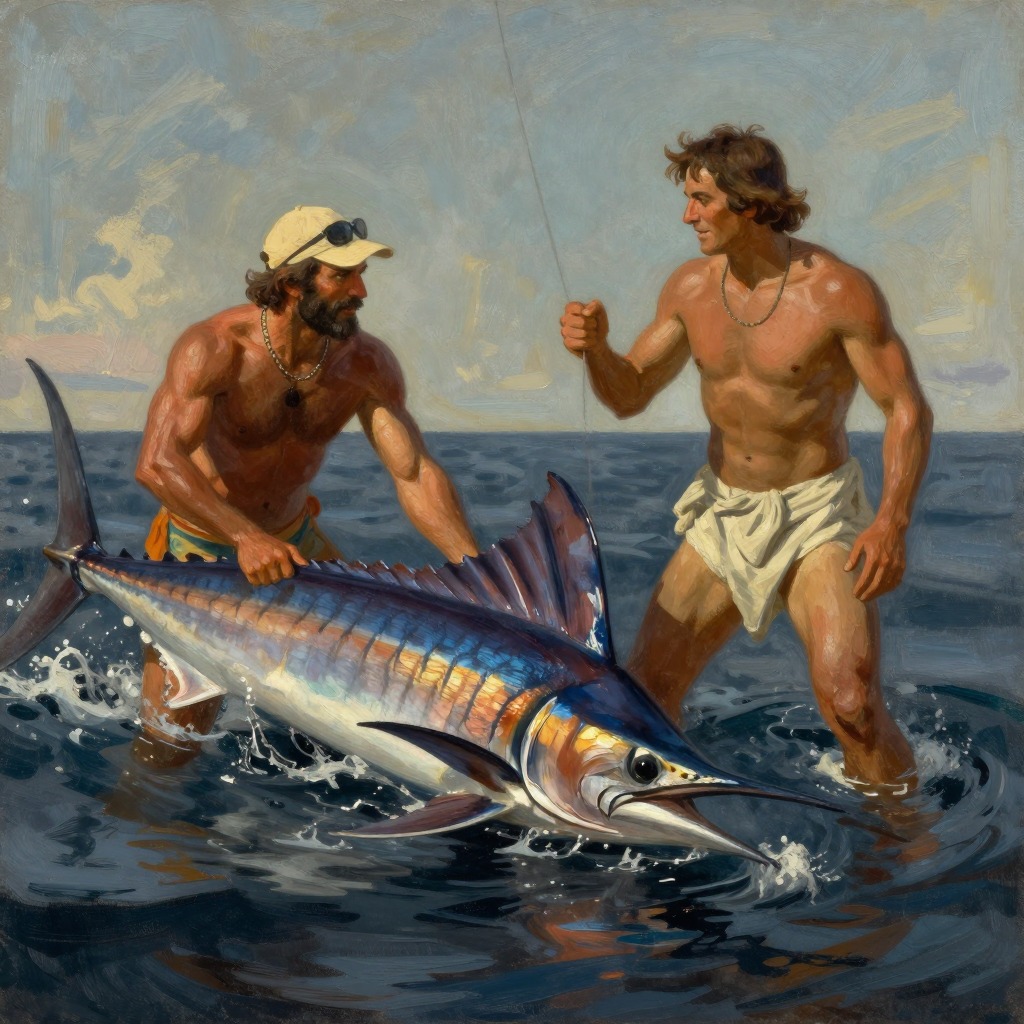
The relationship between the skiff and the marlin is one of profound disproportion. The marlin is two feet longer than the skiff, and when Santiago first sees it, he cannot believe its length. After he kills it, he lashes it alongside the boat, passing a rope through its gills and out its jaws, and making it fast to the bow and stern. The fish is so big that it is like lashing a much bigger skiff alongside. The skiff, now burdened with the immense weight of the marlin, sails more slowly, and the old man notes that it is much lighter after the sharks have torn away half the fish. The skiff's journey home is a slow, heavy passage, and when Santiago finally reaches the harbor, the great tail of the fish stands up well behind the skiff's stern, a testament to the scale of the battle.
The Skiff's Return and Final State
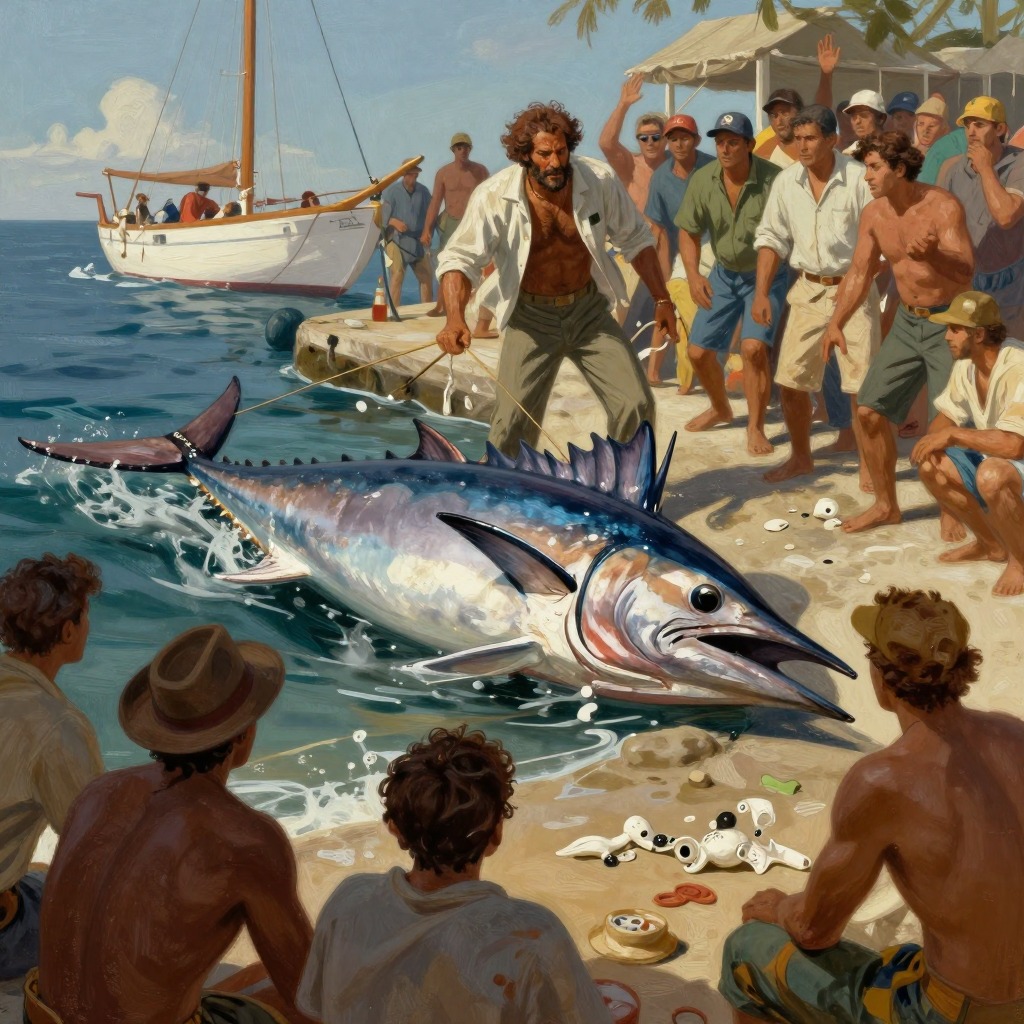
Santiago sails the skiff back into the little harbor at night, when the lights of the Terrace are out. He sails it up onto the shingle below the rocks, steps out, and makes it fast to a rock. He is too exhausted to do more. The skiff itself is sound and not harmed in any way except for the tiller, which is broken during the midnight shark attack and which Santiago replaces with a jagged end. The next morning, the fishermen gather around the skiff, looking at the great skeleton lashed beside it. One fisherman, with his trousers rolled up, measures the skeleton with a length of line, finding it to be eighteen feet from nose to tail. The skiff, which had carried Santiago out to his greatest triumph and back through his greatest defeat, now holds only the ruined evidence of his journey. The boy, Manolin, later tells the old man that Pedrico is looking after the skiff and the gear, signaling that the boat will be prepared for their future fishing together.